

When you're deciding how to shoot a property, the big question often boils down to this: Do you want the speed and natural feel of HDR, or the complete control and polished look of flash? It’s a classic trade-off. For most listings, professional HDR photography is the way to go—it’s efficient and creates the bright, inviting images buyers expect online. But for high-end properties where every detail and texture needs to pop, flash photography is still king.
The Modern Verdict on HDR vs Flash Photography
Years ago, if you wanted top-tier quality, flash was the only serious option. The game has changed. With huge advancements in camera sensors and editing software, today's professional HDR techniques are more than capable—in fact, they’re the superior choice for about 80% of residential properties.
This shift has been a massive win for agents. Professional media helps listings sell faster, generate more showings, and attract higher offers. We can now capture stunning, realistic photos without hauling around complex lighting setups, which means we can get your listing photographed and online faster. In a hot market where homes with professional photos sell up to 50% faster, that speed is a huge competitive advantage.
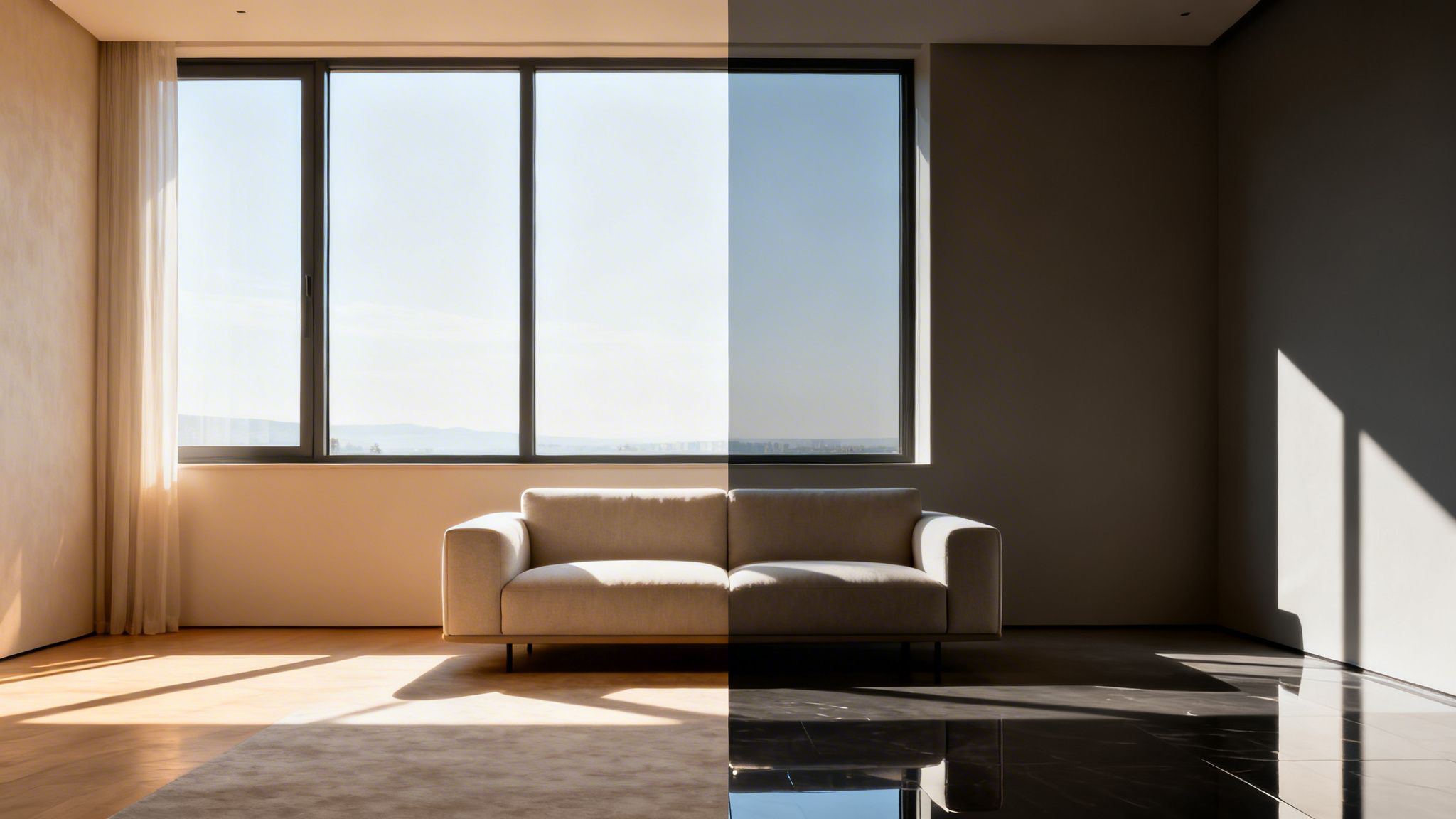
Here at Pinnacle Property Media, our go-to method is professional HDR photography. It allows us to deliver consistently beautiful results with next-day media delivery, getting your listing the immediate attention it deserves. If you want to dive deeper into the different techniques, you can explore our guide on understanding real estate photography styles.
HDR vs Flash Photography at a Glance
To help you see the differences more clearly, this table offers a quick snapshot of the key differences between HDR and flash photography. Use it to help you make an informed decision for your next listing.
| Decision Factor | Professional HDR | Advanced Flash |
|---|---|---|
| Best For | The vast majority of homes where speed and a natural look are key. | Luxury properties where a dramatic, high-end look is non-negotiable. |
| On-Site Time | Fast. A typical shoot is quick and efficient. | Slow. Requires meticulous setup and lighting adjustments for each shot. |
| Light Quality | Bright, even, and natural-looking. Blends existing ambient light seamlessly. | Crisp, controlled, and stylized. Creates a polished, magazine-quality feel. |
| Color Accuracy | Very good, capturing true-to-life tones in well-lit spaces. | Perfect. Overpowers mixed lighting for flawless color representation. |
Ultimately, both techniques have their place. HDR is the workhorse for getting great-looking properties to market quickly, while flash is the specialist's tool for creating a high-end, editorial feel.
Understanding the Core Photographic Techniques
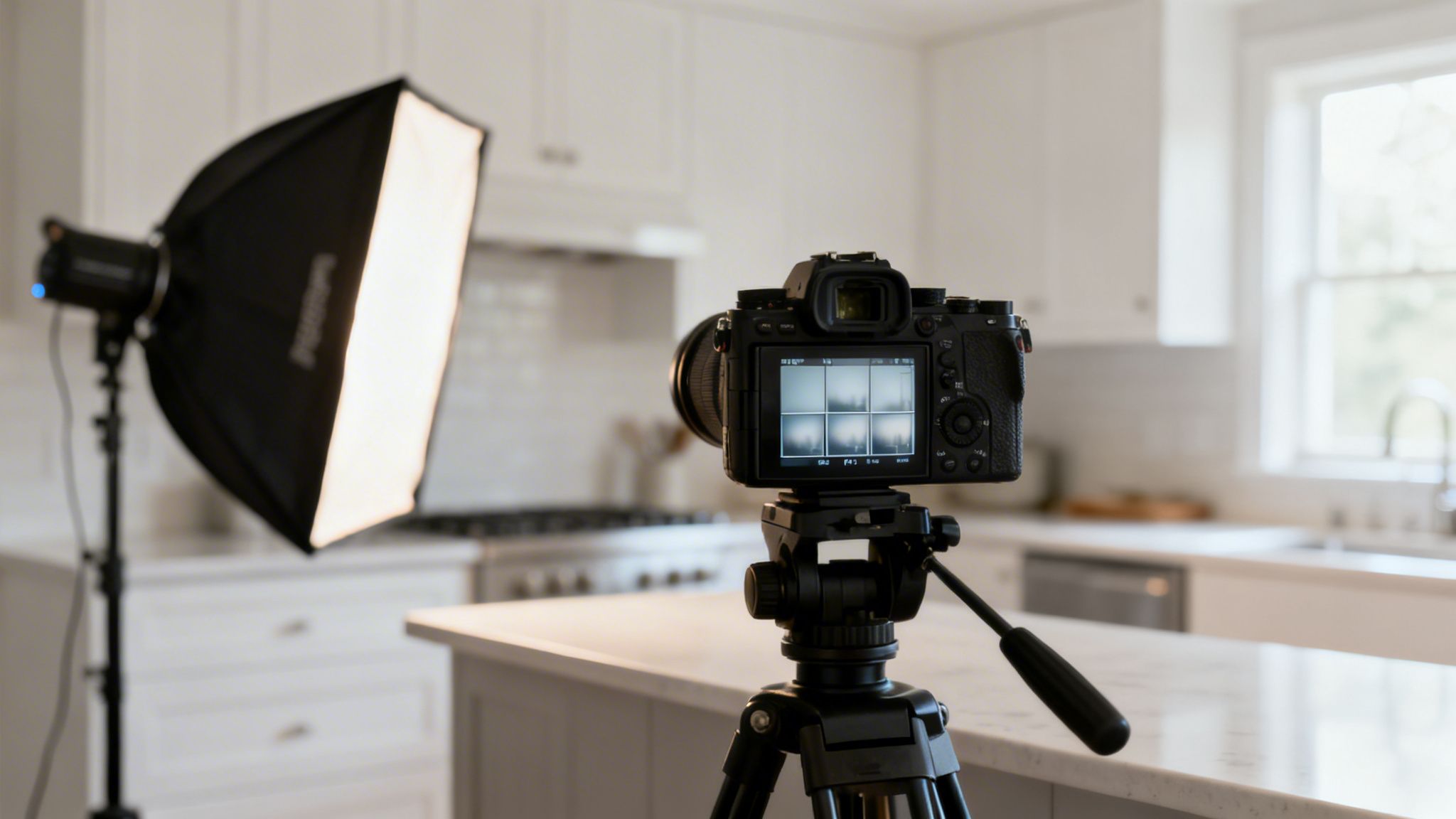
Before we can compare these two powerhouse methods, it's important to understand what's actually happening behind the lens. Each technique solves the same problem—capturing a room with a huge range of light and shadow—in a fundamentally different way.
Professional HDR Photography
Think of professional HDR photography as a digital blending process. The photographer sets up a tripod and takes a series of photos of the exact same scene, a technique called 'bracketing.' Each shot is captured at a different exposure level, from very dark to very bright.
In post-production, software merges these individual frames into one final image. This process creates an incredible dynamic range, allowing you to see every detail, from the bright, sunlit yard outside a window to the subtle textures in the darkest corner of the room. It's a cornerstone of what defines modern real estate photography.
Professional Flash Photography
On the other hand, flash photography is all about control. Instead of blending ambient light, a photographer using this method brings in their own. By strategically placing one or more off-camera strobes, they can overpower inconsistent natural light and sculpt the scene exactly as they want it.
The result is a single, perfectly exposed shot. This gives images a crisp, vibrant, and clean look with true-to-life colors, often seen in high-end architectural magazines.
The real difference comes down to this: HDR blends multiple exposures to manage existing light, while flash masters the scene by creating its own perfect light in a single shot. This control is why listings shot with flash often feel so polished and compelling to the 89% of buyers who start their search online.
Comparing On-Site Speed and Workflow Efficiency
For any busy real estate agent, time is the one resource you can't get back. The decision between HDR and flash photography has a real-world impact on your schedule and how fast you can get a property listed. When speed is the priority, the HDR workflow is hard to beat.
An experienced photographer can move through a property efficiently, capturing multiple bracketed exposures for each shot without the need for complex lighting setups. It’s this incredible efficiency that allows us to offer services like next day appointments and next day media delivery. In a hot market, that kind of turnaround is a game-changer, especially when you consider that listings with professional photos sell faster.
Flash photography, on the other hand, is a much more methodical art form. It's a craft that involves carefully placing and adjusting one or more external lights for every single composition, essentially "painting" the room with the perfect light. While the results can be spectacular, this meticulous process naturally takes more time on-site.
When it comes to pure workflow efficiency, HDR has a clear advantage. Some photographers have shot over 10,000 homes using handheld HDR techniques, a feat made possible by skipping the time-consuming process of moving strobes. This ability to scale is crucial when 73% of top-selling listings use enhanced photos, and you can dive deeper into the technical advantages of HDR photography to see why.
Choosing the Right Technique for Your Listing
So, when does it make sense to use one technique over the other? The real art of property photography lies in knowing which tool to pull out of the bag for a specific job.
For the vast majority of residential listings, professional HDR photography is the industry standard for a reason. It's the perfect solution for homes with good natural light and works wonders for creating the bright, inviting images that capture attention online. When speed is critical—and let's be honest, it almost always is—HDR is your best friend. It’s what allows us to offer services like unlimited photos and next day media delivery.
On the other hand, advanced flash photography is a more specialized skill, reserved for situations where you need absolute control and a touch of drama. We typically reserve this for high-end luxury listings to make premium finishes like custom woodwork or granite countertops pop. It’s also a lifesaver for correcting difficult lighting, such as in windowless basements or rooms with mixed color temperatures, and for cleanly capturing reflective surfaces like marble floors without glare.
To help you decide, here’s a quick guide matching common listing scenarios to the best photographic approach.
Scenario-Based Photography Recommendations
Use this table to match your specific property type and goals with the ideal photography technique.
| Listing Scenario | Recommended Technique | Reasoning |
|---|---|---|
| Standard 3-bed, 2-bath home with good natural light | HDR Photography | Delivers bright, natural-looking photos quickly and cost-effectively, which is perfect for the pace of most residential sales. |
| Luxury property with high-end finishes and custom lighting | Flash Photography | Provides the control needed to highlight textures, create depth, and ensure color accuracy for premium materials. |
| A home with dark rooms or no windows (e.g., a basement) | Flash Photography | Adds clean, high-quality light where none exists, turning a potential negative into a well-lit, attractive space. |
| Fast-turnaround rental or a new construction spec home | HDR Photography | The speed of the HDR workflow is unbeatable for getting listings online fast, which is essential in competitive markets. |
Ultimately, the choice comes down to balancing your goals for speed, budget, and the specific character of the property. This flowchart breaks down the decision-making process even further.
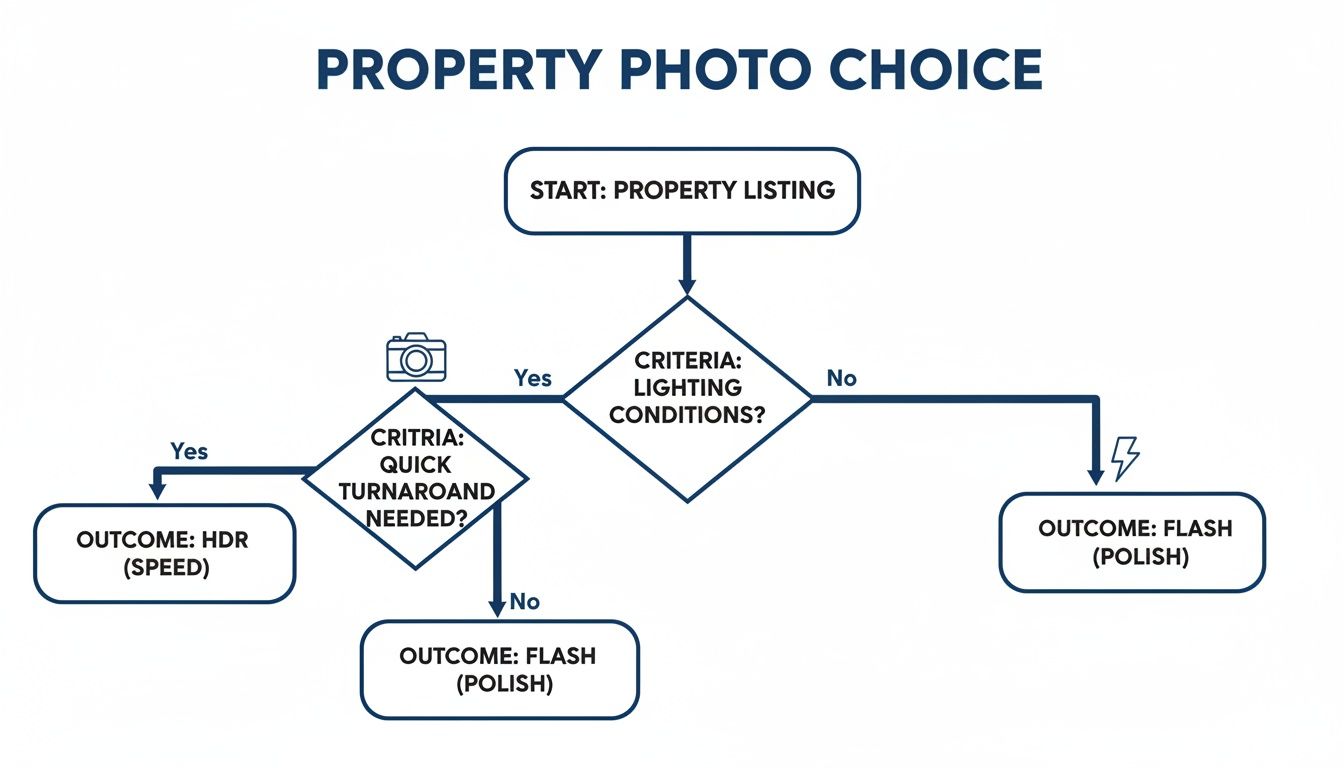
As you can see, the path to HDR is all about efficiency, while flash photography is about meticulous refinement. Working with a professional who understands these nuances—and offers 7 day a week availability—ensures you’re never stuck with the wrong type of imagery for your listing.
For a deeper dive into the equipment that makes this all possible, take a look at our guide to interior photography lenses.
How Photography Quality Impacts Showings and Sale Price
The photos you use aren't just for show—they're a powerful sales tool. Your decision between HDR and flash photography directly influences how quickly you sell, how many people walk through the door, and the offers you receive. Bright, well-composed HDR images feel inviting and true-to-life, which is fantastic for casting a wide net and generating broad online interest.
With high-end properties, however, it's a different game. The polished, almost editorial look that comes from advanced flash techniques can dramatically elevate a home's perceived value, commanding a premium price from the right kind of buyer.
Ultimately, exceptional photography is the backbone of any successful online listing. Great images don't just grab attention; they improve your listing's performance and visibility, which is a huge factor in good SEO in real estate.
At Pinnacle Property Media, we create the visual assets that make buyers take notice. From professional HDR photography and cinematic video and drone services to immersive Matterport and Zillow 3D tours, we build a complete marketing package designed to drive engagement and secure a faster, more profitable sale for you.
Why Your Choice of Professional Partner Matters Most
At the end of the day, the debate between HDR and flash isn't about which tool is better—it’s about who is using it. The real difference-maker is always the skill of the photographer behind the lens. In inexperienced hands, HDR can produce surreal, garish images, while poorly executed flash creates harsh shadows and an unnatural feel.
A true professional knows which technique to apply and when. This is exactly where we come in. Our photographers are masters of our Signature Series professional HDR photography, but they also have the deep expertise to use advanced flash techniques for those situations that demand it. Partnering with a proven expert takes the guesswork out of the equation. You can also spot a pro by their polished online portfolio; many use high-quality photography website templates to showcase their work effectively.
For more tips on what to look for, take a look at our guide on choosing real estate photography companies.
Common Questions from Agents
We get a lot of questions from agents trying to decide between HDR and flash for their listings. Here are a few of the most common ones we hear.
Is Flash Really Necessary for a Standard Home?
Honestly, for most standard residential properties, probably not. Our Signature Series professional HDR photography delivers that bright, clean, and inviting look that buyers expect online. It’s the perfect blend of top-tier quality and a fast turnaround.
We typically reserve flash photography for high-end luxury homes or properties with unique architectural details. In those cases, using a flash lets us sculpt the light to really emphasize custom woodwork, expensive finishes, or dramatic spaces. If you're on the fence, the team at Pinnacle Property Media can always take a look at your specific listing and give you a straight recommendation.
How Do You Handle Tricky Lighting Situations?
Challenging lighting is where a true professional shines. Whether it's a room with dark corners and a huge, bright window, or inconsistent interior lights, our process is built to handle it.
Our HDR technique works by capturing multiple exposures of the same scene and then carefully blending them. This allows us to pull all the rich detail out of the shadows without blowing out the highlights from the windows. The end result is a perfectly and evenly lit photo that makes every room feel welcoming, which is key to generating more showings and attracting higher offers.
We’ve built our entire business around reliability and speed because we know the market doesn’t wait. That’s why we offer 7 day a week availability, next day appointments, and guaranteed next day media delivery on your photos. It's a system designed to help you sell listings faster.
What Sets Your Service Apart from Others?
We see ourselves as a marketing partner, not just a photo service. For busy agents, that means providing a one-stop-shop for everything you need to get a listing live.
Beyond just the still photos (of which you get an unlimited amount), we handle cinematic video and drone services, and the immersive Matterport and Zillow 3D tours that buyers love. Plus, with our 7 day customer service via phone, text, email and chat, you’ll never be left waiting for an answer. We make the entire process seamless so you can focus on what you do best—selling the home.
Ready to make your listings pop and get them sold faster? Partner with Pinnacle Property Media for professional photography and a full suite of marketing tools that work. Book your next-day appointment today!


