

A Cape Coral waterfront listing can have every advantage on paper, canal access, a clean pool, a good dock, sunset exposure, and still look flat online. That usually isn’t a photography problem alone. It’s a prep problem. Waterfront homes, condos, vacation rentals, and luxury properties in Southwest Florida ask more of the property before the camera ever comes out. Water glare, algae on hardscape, dock clutter, dirty glass, and bad timing all show up fast.
The upside is real. Cape Coral’s canal setting gives you visuals most Florida markets can’t match, and listings with professional photos get stronger visibility. The work is in making the property look intentional, not merely clean. Buyers in Fort Myers, Naples, Sarasota, Miami, Fort Lauderdale, West Palm Beach, Boca Raton, and Cape Coral respond to lifestyle. They want to see how the lanai connects to the pool, how the dock feels at sunset, and whether the water access looks usable and inviting.
Why Your Cape Coral Waterfront Photos Aren't Working
You arrive for a late-day shoot on a Gulf-access listing in southwest Cape. The house is strong, the pool is clean, and the dock should sell the property. Then the photos come back and the canal looks flat, the rear elevation feels washed out, and the view through the sliders dies in screen glare. That usually happens because the property was cleaned for a showing, not prepared for waterfront photography.
Cape Coral asks for a different approach. With 400-plus miles of canals, buyers expect the water to read as part of the home, not as a strip behind it. They want to understand boat access, dock usability, privacy across the canal, and how the lanai, pool, and water connect in one frame. If those relationships are unclear, the listing loses one of its biggest advantages online.
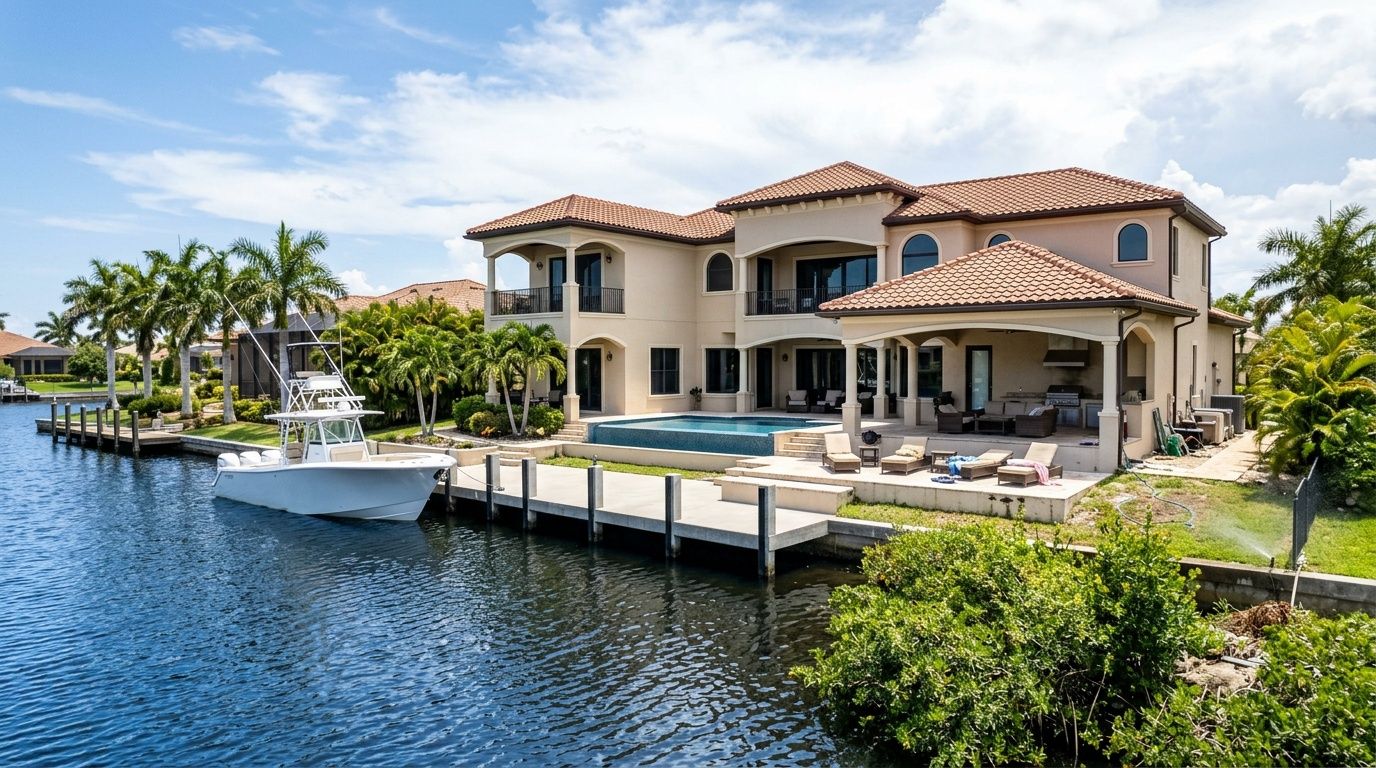
The usual trouble spots are specific to this market. Salt residue on glass kills the view fast. Green staining on pavers and coping reads worse on camera than it does in person, especially around pools and lanais, which is why proper swimming pool deck cleaning methods can make a visible difference before a shoot. On some canals, dark water or algae along the seawall can also pull attention away from the dock and make the whole backyard feel neglected.
Sun angle is the other big one. A rear-facing western exposure can produce beautiful twilight color, but it can also blow out highlights on white pool cages and flatten the water if the timing is off. Eastern rear exposures often photograph better earlier, especially when the goal is clean water color and detail on the dock. Agents who treat every waterfront appointment like a standard sunset slot leave good images on the table.
Aerials matter here too, but only if the site is ready from above. Drone frames reveal roof staining, mismatched pavers, canal width, neighboring docks, and how directly the lot sits on the turn or basin. For agents planning a full waterfront shoot, these aerial drone photography ideas for Florida properties help show what should be cleaned, staged, or moved before the pilot ever launches.
The fix is a shot plan built for Cape Coral conditions. Prep the water side as carefully as the front entry, time the session to the actual rear exposure, and assume every reflective surface will show more on camera than it does during a walkthrough. That is how a waterfront listing starts looking like waterfront property instead of just another house with a pool.
The Essential Waterfront Prep Checklist
A Cape Coral waterfront shoot can fall apart fast if prep starts the night before. I have walked into listings with a spotless kitchen and a canal-side mess waiting out back. Buyers in this market judge the rear elevation, dock, and water view first, so the work has to start there.
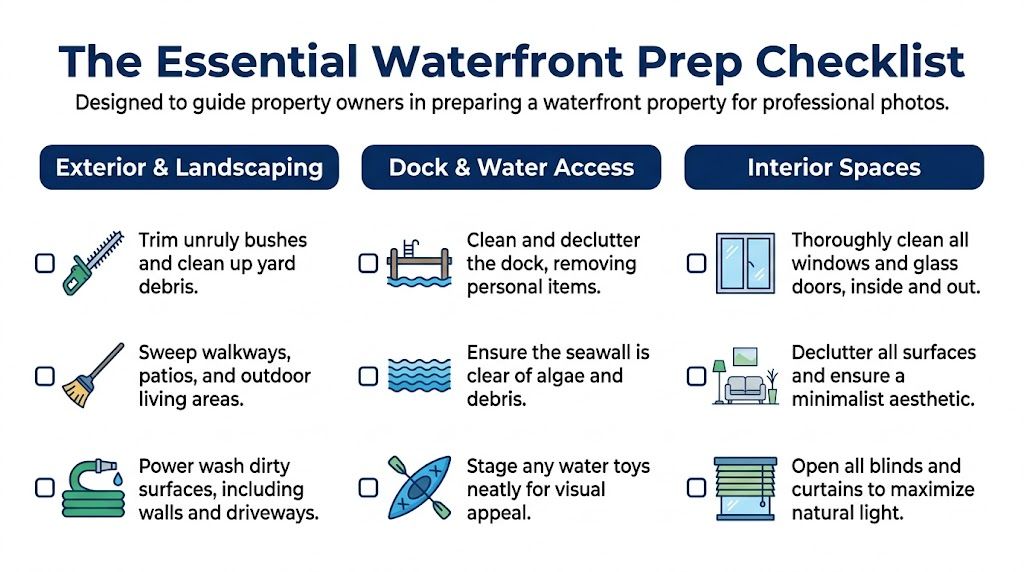
Start 48 hours before the shoot
Give yourself two days, not two hours.
That window gives owners time to clean, test lights, move clutter, and fix small problems that show up badly on camera. It also gives the photographer room to set the shoot around the rear exposure, wind, and water conditions instead of forcing everything into a generic late-day slot. On Cape Coral canals, small timing choices change how the dock, boat lift, pool water, and canal surface read in photos.
Use that first day to confirm the shoot plan. Use the second day to walk the property like a buyer would. If the dock is one of the selling points, treat it like a front entry.
Clean the hard surfaces buyers will notice immediately
On waterfront homes, dirty exterior surfaces drag down the whole set of images. Salt air, algae, mildew, and runoff stains build up fast on pavers, coping, docks, and seawalls. Even if a seller has gotten used to it, the camera will not ignore it.
Focus the cleaning on the areas that frame the water view:
- Dock boards and edges: Remove bait stains, mildew, rust marks, and leaf buildup.
- Lanai pavers: Scrub corners, joints, and shaded sections where algae hangs on.
- Pool deck surfaces: Clean decking helps the pool water photograph with better color.
- Walkways and driveway: Buyers read overall maintenance from the moment they arrive.
If the owner wants a practical reference before bringing in a contractor, these swimming pool deck cleaning methods show the kinds of buildup that need attention before a photo day. For a broader room-by-room and exterior planning list, this guide to professional real estate photography prep before a listing works well alongside a waterfront-specific checklist.
Stage the lanai for actual use
A strong waterfront lanai photo should answer one question fast. Can a buyer picture spending time here?
That does not require heavy staging. It requires order. Straighten seating, wipe down tables, fluff cushions, and remove the things that make the space feel temporary or crowded. Bug spray, pet bowls, faded towels, stacked toys, broken planters, and extra pool gear should all go before the photographer arrives.
Use simple judgment with props. A neat table setting or a bowl of citrus can help. Too many decorative items start to compete with the water view, which is usually the main feature.
| Area | Keep | Remove |
|---|---|---|
| Lanai seating | Matching cushions, one tidy table setup | Random chairs, folded loungers |
| Pool area | Clean towels if styled neatly | Floats, nets, chemical containers |
| Grill zone | Closed, polished grill | Utensils, propane clutter, cover bags |
Clear the dock and tidy the seawall
The dock needs to read as clean, usable square footage. That is what buyers respond to in Cape Coral.
Remove fishing gear, hoses, buckets, shore-power cords, coolers, cleaning supplies, and storage bins. If the boat lift is in good shape, clean it and leave it visible. If kayaks or paddleboards look new and fit the lifestyle of the home, they can stay. If they are faded, warped, or shoved against the cage, move them out of frame.
Check the seawall too. Staining, heavy algae lines, and weeds growing through cracks pull attention away from the lifestyle shot you want. You may not be able to solve every cosmetic issue before the appointment, but you can clean enough that the eye stays on the dock, pool, and canal.
Prep for drone and twilight in one pass
Aerials and twilight both reward thorough prep. They also expose different problems.
Drone photos reveal roof debris, worn paver patterns, neighboring clutter, canal alignment, and how the lot sits on a bend or basin. Twilight photos show every dead bulb, mismatched color temperature, and dark patch in the lanai. Handle both during the same walkthrough so you are not fixing one set of issues and missing the other.
Before the photographer arrives, check these items:
- Exterior accent lights: Replace burned-out bulbs and match color temperature.
- Pool lights: Set one intentional color or keep them clean white.
- Lanai lighting: Use warm, consistent fixtures where possible.
- Visible interior rooms: Turn on lamps and overheads that show through rear windows.
- Yard and dock area: Move hoses, bins, toys, and anything a drone will catch from above.
Cape Coral waterfront photography crews often build the shoot around these details because rear exposure, canal reflections, and visible dock condition have a direct effect on the final set, as noted earlier by House Gecko Media’s Cape Coral real estate photography page. The cleaner and more intentional the setup, the easier it is to get strong daylight, aerial, and twilight images from one appointment.
Leveraging Cape Coral’s Unique Waterways
A Cape Coral canal home can photograph flat fast. The pool looks good, the rear elevation is clean, then the water behind it reads like a narrow ditch because the angle was wrong. That happens all the time here. The canal is part of the product, so the photo set has to show width, direction, dock usability, and the kind of boating access the buyer is paying for.
What works on Cape Coral canals
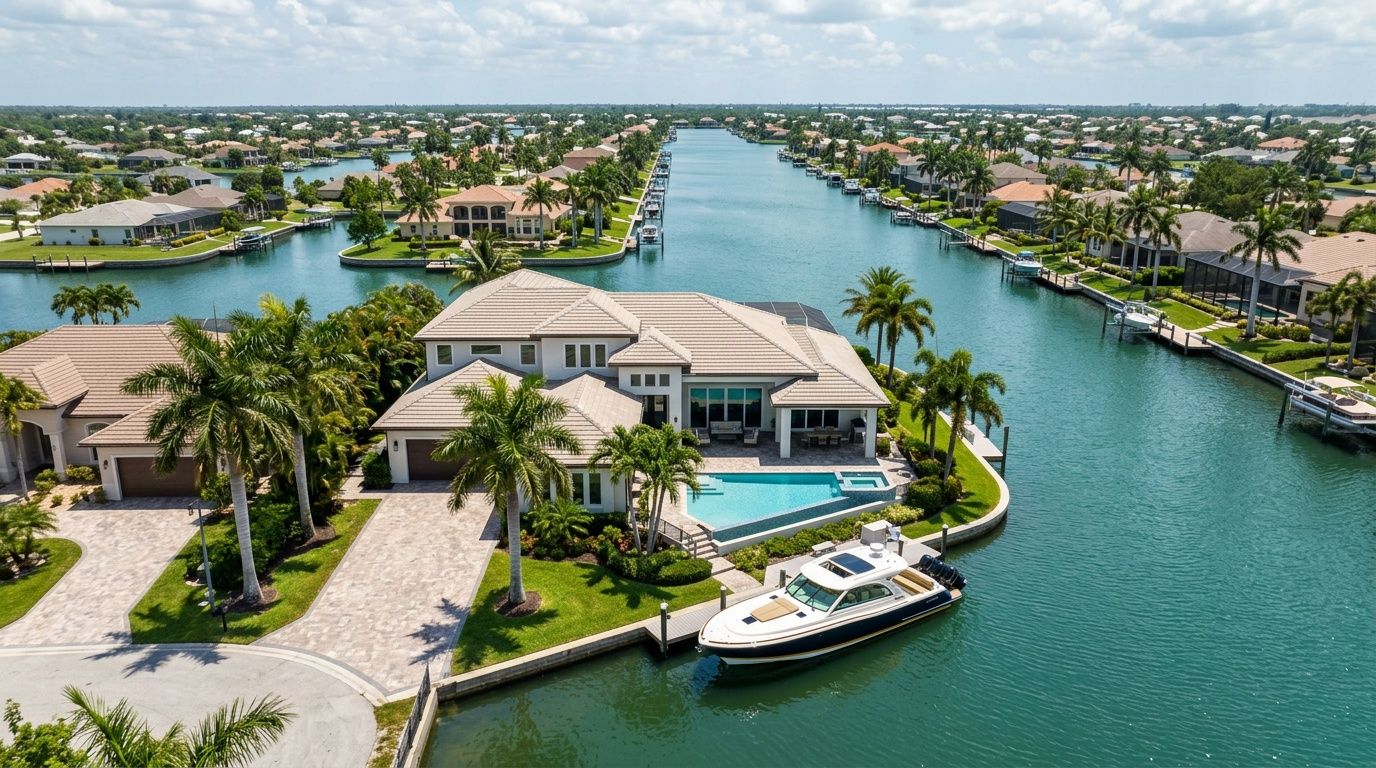
Cape Coral gives photographers more variety than a typical waterfront market. Some lots sit on long straight canals that create strong leading lines. Others open to basins or wider intersections where a drone shot can make the water feel expansive. Saltwater properties near the river and Gulf routes often show better lifestyle cues for boaters, but they also reveal more seawall staining, tidal marks, and water color issues. Freshwater canals can look calmer and greener, though they need careful framing so buyers understand they are seeing a canal network, not open water.
The strongest listings usually combine three views with different jobs:
- An angled rear photo from ground level: Shows how the lanai, pool, dock, and canal connect in one frame.
- A dock-side perspective: Sells lift access, fish-cleaning space, captain's walk, and the feel of stepping straight onto the boat.
- A higher drone composition: Explains canal width, intersecting waterways, bridge proximity, and whether the lot sits on a prized bend, basin, or straight run.
That mix helps buyers read the property in seconds instead of studying the remarks to piece it together.
Use Cape Coral conditions to your advantage
Water color changes a lot here. After heavy rain, some canals go dark or silty. In hotter stretches, algae can collect along seawalls and corners. Wind can rough up reflections by midafternoon. Good prep means checking the rear exposure and the canal itself before shoot day, then choosing a time when the water looks cleaner and the sun gives the surface some shape instead of glare.
I also watch for what is across the canal. In Cape Coral, the opposite bank can either help the composition or hurt it. A neat row of docks and palms gives context. A cluttered neighbor yard, a blue tarp, or a boat on blocks pulls attention away from the listing. That is one reason professional real estate photography tips for Florida properties matter more on waterfront homes than inland ones. The background is part of the sales story.
Frame the water without hiding it
Tropical landscaping should support the canal view, not block it. Trim palms, mangroves, and overgrown hedges so buyers can see the water line from the lanai, primary suite, and main living area. Keep enough planting to soften the seawall and pool cage, but do not let fronds cover dock hardware or boat lifts. If the seller needs help deciding what to cut back, A Homeowner's Guide to Landscaping for Florida is a practical reference.
One more Cape Coral-specific point. Drone and twilight upgrades pay off most on homes where the canal pattern is part of the value. Twilight handles reflections, dock lights, and pool glow. Drone work shows whether the property sits near open spreads of water or tucked deeper into the canal grid. Used together, they turn a standard rear exterior set into a waterfront package that matches how buyers shop this market.
Common Mistakes That Sabotage Waterfront Photos
Some problems look small in person and become obvious in the final gallery. Waterfront homes are less forgiving because buyers are comparing details in the exterior, the view, and the lifestyle cues all at once.
The timing mistakes
Ignoring tide schedules is the big one. A dock can look crisp and functional at the right moment, then awkward or partially flooded later. Waiting too long in the day can also turn beautiful rear-facing spaces into harsh contrast scenes with blown-out water and dark interiors.
A second timing issue is forgetting twilight prep. Agents schedule the shot, but no one checks the lights. Dead bulbs, mismatched color temperatures, and a dark pool all weaken the emotional pull of the evening set.
The clutter mistakes
Waterfront clutter reads differently than regular household clutter. A hose on a side yard is minor. A hose on a dock says maintenance instead of lifestyle. Fishing gear, life jackets, dock boxes, bait buckets, pool tools, and cleaning supplies all pull the eye away from the reason buyers clicked.
Dirty glass is another frequent miss. On canal homes, sliders and picture windows need to disappear on camera. If buyers can see streaks, salt film, or screen haze, the view feels compromised.
Clean windows don’t just improve the interior photos. They protect the value of the view from inside the house.
The in-photo distraction mistakes
Ceiling fans left on, glowing TV screens, and parked vehicles in bad positions can all spoil otherwise strong frames. The local Cape Coral methodology specifically flags fans and lit televisions as common issues during capture and virtual tour review. The fix is simple. Walk the house once more right before the photographer starts.
For vacation rentals, Airbnb properties, condos, and waterfront homes, that final walkthrough matters as much as the cleaning crew.
Pro Tips for Magazine-Worthy Images
A clean property is the baseline. Distinctive waterfront imagery comes from choices that create mood and help buyers imagine being there.
Use light for emotion, not just visibility
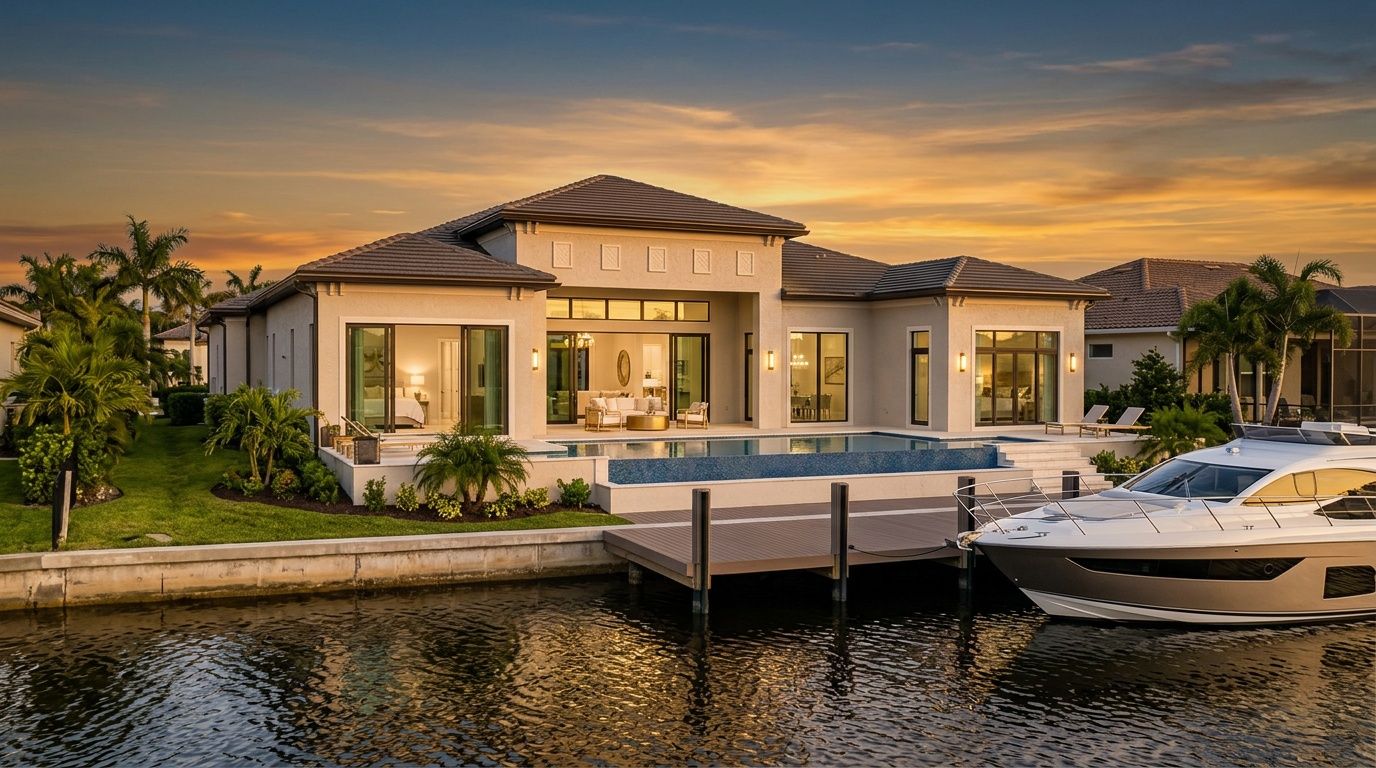
Golden hour is usually where Cape Coral waterfront homes start looking expensive on camera. Warm side light gives texture to pavers, softens stucco, and puts sparkle in the canal without the harshness of midday. Twilight goes a step further. The Cape Coral prep methodology notes that twilight shots increase emotional appeal and can increase showings in Southwest Florida luxury markets, especially when paired with sunset imagery in a full package.
Blue-hour work only succeeds if the house is ready for it. The pool needs to glow. Interior lamps should be on. Exterior fixtures should be consistent. A dark back elevation at twilight looks abandoned, not elegant.
Stage a lifestyle, but keep it believable
The strongest outdoor scenes usually include a light touch of use:
- Dining setup: A simple outdoor place setting helps buyers understand the lanai as living space.
- Seating arrangement: Face chairs toward the canal or sunset direction if that’s the draw.
- Water toys: A clean paddleboard or kayak can work if it feels curated and fits the property.
What doesn’t work is over-styling. Too many props make a home feel staged for a brochure instead of ready for a buyer.
Think beyond still photos when the view is the feature
Water moves. Palm fronds move. Reflections change by the minute. That’s why motion media often adds more value on waterfront homes than on inland listings. Real estate video marketing helps show the approach from the canal side, while aerial drone photography can clarify lot position, bridge proximity, and the shape of the water behind the home.
For out-of-state buyers comparing luxury homes, condos, and vacation rentals remotely, 3D tours and Matterport scanning help them understand how the interior connects to the lanai and waterfront. On the commercial side, commercial real estate media services can do the same for marinas, mixed-use properties, and waterfront retail, while AEC reality capture and documentation supports construction teams with visual records and progress tracking.
If you’re editing or reviewing final media, these notes on how to edit real estate photos help explain what should be corrected in post and what must be solved on-site before capture. In Florida, on-site prep always wins.
From Prep to Profit Your Next Step
Cape Coral waterfront listings reward discipline. The homes that stand out are the ones where someone planned the tide, cleaned the hardscape, opened the view corridors, styled the lanai, and made the dock look like a selling feature instead of a storage zone. That’s how to prep waterfront for photos in Cape Coral in a way that changes the finished media.
This is also why agents do better with a repeatable system. Professional HDR photography, cinematic video and drone services, unlimited photos, Matterport and Zillow 3D tours, and fast delivery all matter more when the property is properly prepared. One practical option is Pinnacle Property Media, which offers next-day appointments, next-day media delivery, seven-day availability, and seven-day customer service by phone, text, email, and chat for residential listings, commercial buildings, and construction projects across Florida.
If your listing needs immersive buyer-friendly marketing, this look at Cape Coral real estate benefits of Matterport 3D virtual tours shows where that format fits, especially for remote buyers and high-visibility properties.
When the home is waterfront, speed matters. Conditions change. Weather changes. Showing windows tighten up. If the property is nearly ready, don’t wait until the canal looks perfect and the calendar doesn’t.
Whether you’re marketing a Cape Coral waterfront home, a condo, a luxury listing, a vacation rental, an Airbnb property, a commercial building, or a construction project, Pinnacle Property Media can help you move from prep to polished marketing fast. Book a shoot, request a quote, or schedule a consultation to build a media package that fits the property. With $50 off your first appointment, next-day availability, next-day media delivery, and full-service support seven days a week, it’s easier to get your listing live with stronger visuals and better momentum.


