

When you stage a house to sell, you’re doing more than just tidying up. You're strategically arranging furniture and decor to create a space that appeals to the widest possible audience of buyers. The ultimate goal is to depersonalize the home so potential buyers can easily picture their own lives unfolding there. When done right, this almost always leads to a faster sale and a better price.
Why Home Staging Is a Critical Selling Tool
Think of staging as less about interior decorating and more about smart marketing. It's a powerful strategy designed to forge an emotional connection the moment someone walks through the door. You want buyers to feel an instant sense of "this could be home." Staging achieves this by transforming a property from your house into their future home—a welcoming, aspirational space anyone can imagine owning.
Good staging tells a story. By arranging furniture to improve flow, using inviting, neutral colors, and adding just the right decor, you’re selling a lifestyle. It helps buyers look past the bricks and mortar and see the potential for their own happiness within those walls.
The Psychology of Buyer Perception
I’ve walked through countless empty homes, and they almost always feel cold and surprisingly small. On the flip side, a home filled with too much personal stuff can feel cluttered and make it impossible for buyers to connect. Staging is the perfect middle ground.
- It defines each room's purpose. That awkward spare room is suddenly a perfect home office or a charming guest bedroom.
- It highlights the best features. Smart furniture placement can draw the eye to stunning windows, high ceilings, or a beautiful fireplace you want buyers to notice.
- It creates a sense of scale. Buyers can immediately see how their own furniture will fit, which removes a huge layer of guesswork and anxiety.
Staging isn't about hiding flaws; it's about showcasing possibilities. It gives buyers the visual cues they need to mentally move in, making the decision to submit an offer feel natural and exciting.
The Data-Backed Impact on Sales
The results aren't just a gut feeling; the numbers back it up. A 2025 update from the Home Staging Institute found that a whopping 73% of real estate agents agree that a staged home sells faster. A property that might otherwise sit for 60 days could be gone in just 16–20 days after being properly staged.
Even more telling, 77% of buyers’ agents said staging makes it much easier for their clients to visualize a property as their future home. In a competitive market, that's a massive advantage. You can discover more insights from the Home Staging Institute report to see the full picture.
These statistics confirm a simple truth: investing in your home's presentation is a direct investment in your selling success. If you want to dive deeper, we have a complete guide covering the primary benefits of home staging.
Ready to get started? We know the selling process moves quickly. That's why we offer next-day appointments and 7-day-a-week availability, ensuring you can begin this transformative process without delay. Our customer service team is always on standby via phone, text, email, and chat to help you get the results you need.
Laying the Groundwork: The 4 Keys to Pre-Staging Success
Before you even think about bringing in a single piece of staging furniture, you’ve got to prep the canvas. This is the foundational work that makes or breaks the entire staging effort. The goal is simple: create a clean, neutral, and inviting space that allows buyers to see its potential, not your personal life.
Nailing these four key steps is what sets the stage for a quicker sale at a better price. It's all about methodically removing distractions so your home's best features can take center stage.
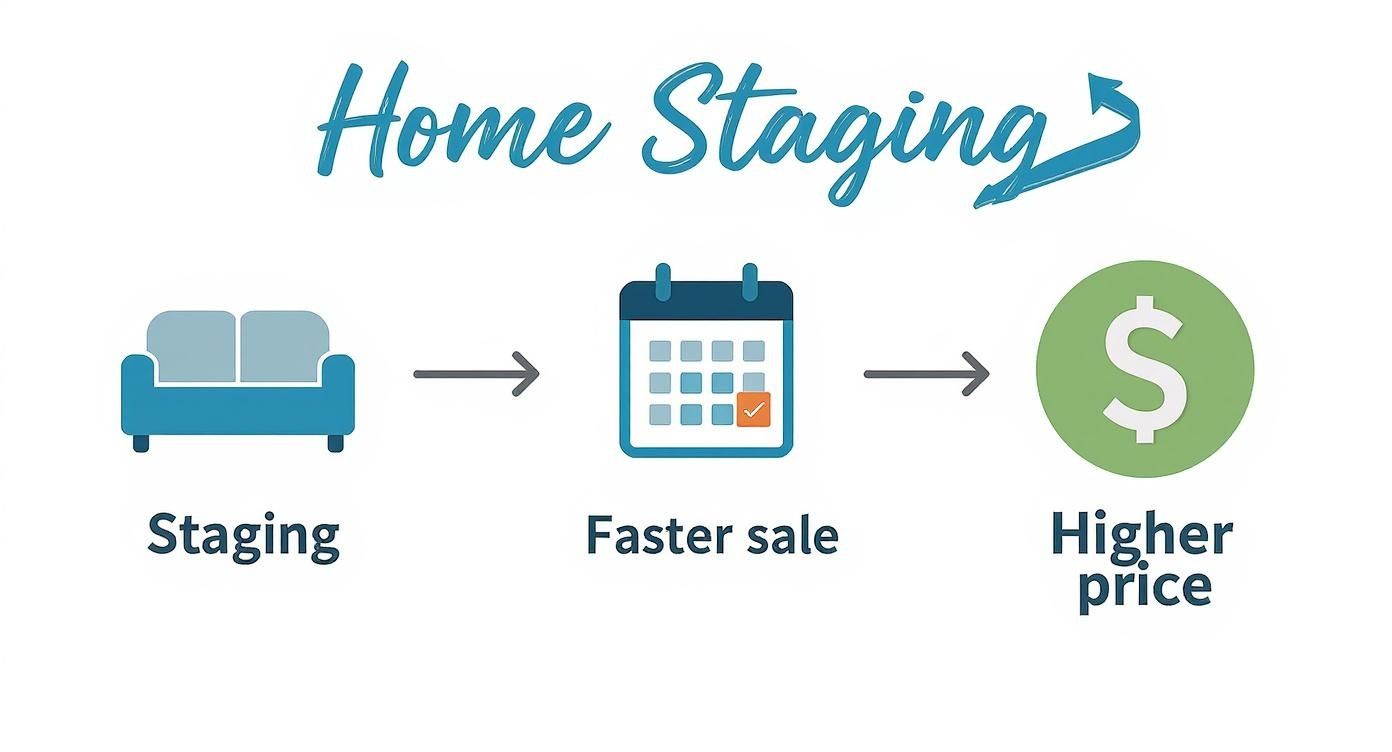
As you can see, there's a direct line from smart preparation to a successful sale. This isn't just about making things look pretty; it's a strategic move designed to maximize your return on investment.
First, Declutter to Maximize Space
The single most impactful thing you can do is declutter. We all accumulate things over time, and what feels cozy to us can look like chaos to a potential buyer. You're trying to create a feeling of open, airy space that makes every room feel larger and more functional.
A good rule of thumb is to remove at least one-third of the items from every single room. This means thinning out furniture, boxing up knick-knacks, and getting rid of any clutter that’s hogging floor or surface space. Practical tools like clear storage bins with lids for organization are your best friend here. You're selling square footage, not your belongings.
And don't stop at what’s visible! Buyers will open closets and cabinets. If they’re overflowing, it sends a clear message: "this house doesn't have enough storage." A neatly organized closet that's only half-full, on the other hand, suggests there’s plenty of room to grow.
Second, Depersonalize for Broader Appeal
Buyers need to be able to picture their own lives in your home. That’s nearly impossible if they’re surrounded by your family photos, heirlooms, and personal memorabilia. Depersonalizing is all about creating a blank slate that appeals to the broadest audience possible.
It's time to pack away a few things:
- Family Photos: Take down all personal portraits from walls, shelves, and especially the refrigerator.
- Collections: Your prized collection of teacups or sports memorabilia might be special to you, but to a buyer, it’s just a distraction.
- Personalized Decor: Anything with family names, monograms, or very specific themes needs to be stored away for your next home.
The point isn't to create a sterile, personality-free box. It's about creating a neutral, welcoming atmosphere. By removing your personal story, you give buyers the mental space to imagine their own photos on the walls and their own life unfolding there.
Feeling overwhelmed? We get it. Our team offers next-day appointments to provide expert, hands-on advice. Plus, our customer service is available 7 days a week by phone, text, email, and chat to support you through the process and deliver the results you need.
Third, Deep Clean Until It Shines
A sparkling clean home is absolutely non-negotiable. I'm not talking about your typical weekly tidy-up; this requires a top-to-bottom, deep-down scrub of every nook and cranny. Nothing tells a buyer "this home has been well-maintained" like a property that is immaculately clean.
Your checklist should feel like a spring-cleaning marathon:
- Scrub every surface: Kitchen and bathroom countertops, sinks, and fixtures should gleam.
- Get floors spotless: Mop hardwoods until they shine, steam clean carpets, and scrub tile grout back to its original color.
- Wash the windows: Clean them inside and out to let in as much natural light as possible.
- Tackle the forgotten spots: Don't forget baseboards, light fixtures, ceiling fans, and window blinds.
A pristine home feels fresh and instantly welcoming. It eliminates potential red flags and lets the property’s best features shine through. For more guidance on this, check out these key steps to get your home market-ready for a quick sale.
Fourth, Handle All Minor Repairs
Finally, it's time to walk through your home with the critical eye of a buyer. Fix all those small things you’ve learned to live with. A dripping faucet, a squeaky door, or a scuffed-up wall might seem trivial, but to a buyer, a collection of small problems suggests a pattern of neglect.
Make a punch list and knock it out before your first showing. Touch up paint, replace burnt-out lightbulbs, tighten loose cabinet hardware, and make sure every door and window opens and closes smoothly. Taking care of these little issues removes objections before they can even form and builds buyer confidence that your home is truly move-in ready.
A Room-by-Room Guide to Staging for Impact
Once you’ve decluttered, deep cleaned, and handled necessary repairs, it's time to get into the specifics of staging. This is where the magic really happens—turning each room into a space that buyers can instantly connect with. Think of it as creating a series of snapshots that help people mentally move their own furniture in and start picturing their life there.
Some rooms just carry more weight with buyers than others. That's not just a hunch; it's backed by data. A 2025 report from the National Association of Realtors (NAR) identified the spaces that make the biggest impression: the living room (37%), the primary bedroom (34%), and the kitchen (23%).
Focusing your energy on these "big three" is the smartest way to invest your time and budget. The same NAR report found that nearly 29% of real estate agents saw a 1% to 10% increase in the final sale price for homes that had these key areas staged, compared to those that didn't. You can dive into the specifics by reading the full NAR report on home staging.

To help you prioritize, here’s a quick breakdown of where to focus your efforts for the best results.
Room Staging Priority and Focus Areas
| Room | Staging Priority | Key Actions | Buyer Appeal |
|---|---|---|---|
| Living Room | High | Define conversational zones, maximize light, create a focal point. | Envisioning daily life and entertaining. |
| Primary Bedroom | High | Create a serene, hotel-like retreat with luxe bedding and symmetry. | Seeing a peaceful, private escape. |
| Kitchen | High | Showcase counter space, storage, and pristine cleanliness. | Believing the home is well-maintained and functional. |
| Bathrooms | Medium | Deep clean until sparkling, add spa-like touches (white towels, orchid). | Feeling clean, fresh, and updated. |
This table shows how to strategically tackle the most important rooms to create an emotional connection with buyers and highlight your home's best features.
Creating an Inviting Living Room
The living room is usually the first space a buyer sees inside, and it sets the tone for everything else. The goal here is to make it feel like a versatile, welcoming hub for both relaxing and socializing. It's all about creating flow and defining comfortable spaces.
Take a hard look at your furniture. Bulky or excess pieces can easily make a room feel small and crowded. It's almost always better to remove an item or two to open up the floor plan. Pull the remaining furniture—like your sofa and a couple of armchairs—away from the walls and arrange them into a conversation-friendly group. This one move alone can make a room feel significantly larger and more thoughtfully designed.
A few simple actions can completely change the feel of the space:
- Establish a Focal Point: Arrange seating to highlight something great, like a fireplace or a beautiful view. If you don't have a natural focal point, create one with a large piece of abstract art or a stylish area rug to anchor the room.
- Let the Light In: Open every blind and curtain. Then, layer in more light by adding floor and table lamps to brighten up any dark corners. Warm, layered lighting is always inviting.
- Soften the Edges: A few neutral throw pillows and a cozy blanket tossed over a chair can add texture and a sense of comfort that buyers respond to. Just be sure to avoid bold patterns or anything too personal.
Remember, the mission isn't to decorate for your own taste. You're creating a blank canvas—a universally appealing environment where buyers can easily imagine their own family and friends gathering.
Staging the Kitchen for Maximum Appeal
Everyone knows the kitchen is the heart of the home, and buyers will inspect every inch of it for function and condition. Your goal is to make it look spacious, clean, and full of storage. A well-staged kitchen quietly communicates that this is an efficient and enjoyable place to cook and live.
First things first: clear the countertops entirely. Remove every appliance, knife block, and utensil holder. Then, strategically place just a few decorative items back. Think a small stack of crisp white plates, a bowl of fresh lemons for a pop of color, or a brand-new cookbook on a stand. This instantly creates the illusion of more workspace.
Next, it’s time to focus on the details that signal a well-cared-for home.
- Refresh the Hardware: One of the fastest, cheapest, and most impactful updates you can make is swapping out dated cabinet pulls and knobs for something more modern.
- Tidy the Pantry: Buyers absolutely will open cabinets and pantries. A neatly organized, half-full pantry proudly shows off all the storage you have to offer.
- Make It Shine: Ensure every single surface—appliances, countertops, sink, faucet—is sparkling clean. A pristine kitchen gives buyers confidence in the overall maintenance of the house.
If you want to learn more about making this critical room pop, check out these top tips for staging a kitchen for potential buyers.
Transforming the Primary Bedroom into a Retreat
The primary bedroom needs to feel like a serene and luxurious escape. Buyers are dreaming of a peaceful sanctuary where they can shut the door and unwind. Your job is to depersonalize the space completely and create a high-end, hotel-inspired vibe.
The bed is the absolute star of the show here. Dress it in fresh, high-quality, neutral bedding. A fluffy white duvet, layered with coordinating pillows and a simple throw blanket, creates an almost irresistible sense of comfort. Also, make sure the bed is scaled appropriately for the room. If your California King is making the space feel cramped, it might be worth swapping it for a queen-size air mattress with a nice frame for showings.
Here are a couple more ways to get that five-star hotel feel:
- Embrace Symmetry: Using matching nightstands and lamps on both sides of the bed creates a powerful sense of balance and calm.
- Clear All Surfaces: Remove every personal item from dressers and nightstands. A single decorative box or a small, elegant plant is more than enough.
- Add Softness Underfoot: A neutral area rug placed under the bottom two-thirds of the bed can ground the room and add a layer of warmth. Don't forget to organize the closets to about 50% capacity to showcase their true size.
Making Bathrooms Feel Like a Spa
Bathrooms should feel like immaculately clean, spa-like oases. Cleanliness is non-negotiable here. You'll need to deep clean every surface, from the tile grout and shower glass to the light fixtures and mirror.
Once it's spotless, pack away all personal toiletries, used towels, and old bath mats. Bring in a set of fresh, fluffy white towels and fold them neatly on a rack or roll them in a basket. Add a new bar of soap in a clean dish, a small orchid for a touch of elegance, and maybe a single bottle of high-end hand lotion on the counter. The idea is to create an impersonal but luxurious atmosphere.
If you start feeling overwhelmed or just want a professional eye, remember that our team is always ready to jump in. We offer next-day appointments, and our customer service is available 7 days a week via phone, text, email, and chat to answer your questions, guarantee great results, and help you get market-ready fast.
Creating Irresistible Curb Appeal
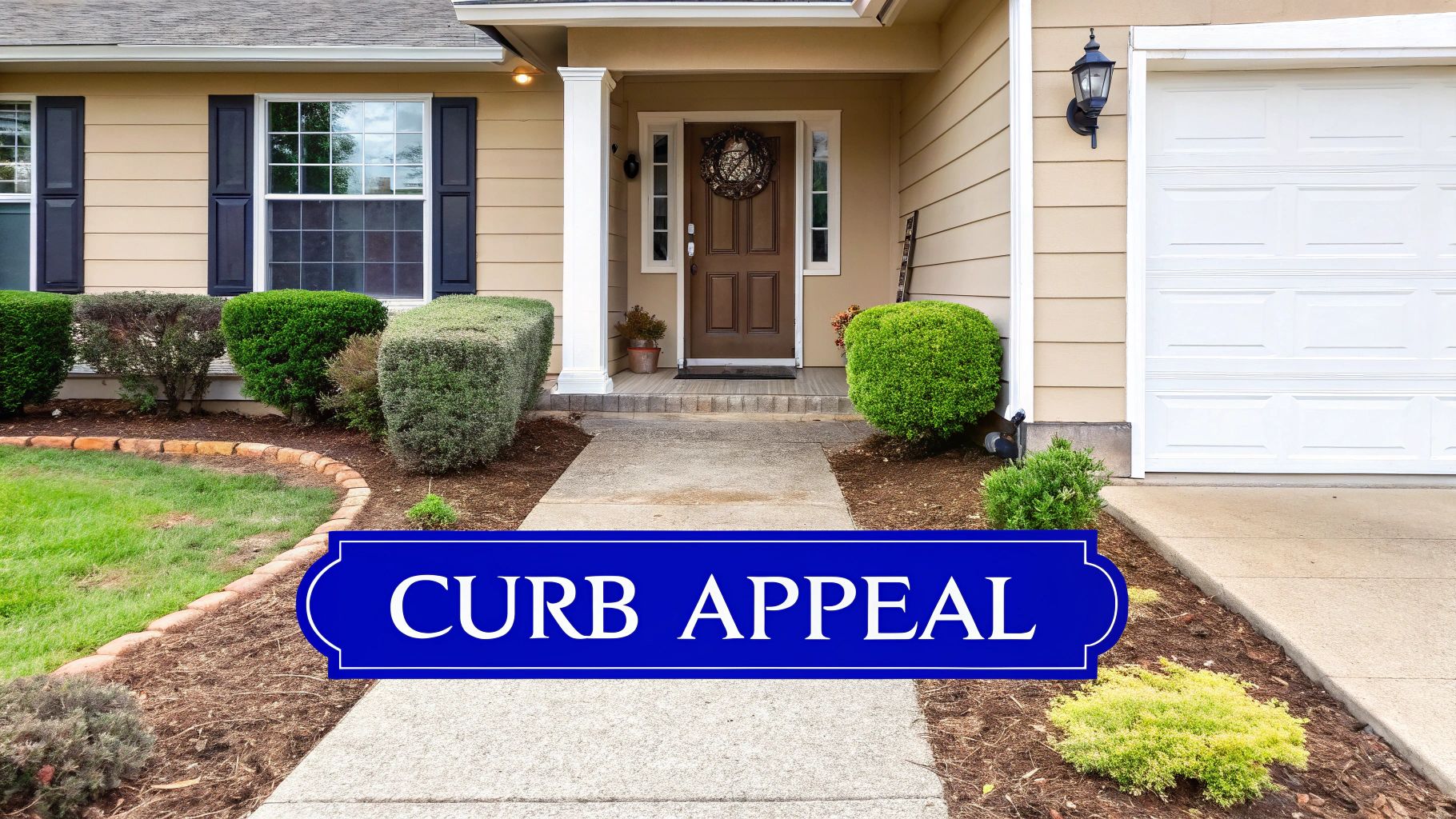
A buyer’s first impression doesn't start in the foyer. It starts at the curb. That initial glimpse from the car window or the sidewalk is where the story of your home begins, and it sets the tone for the entire showing. Long before they even touch the doorknob, a potential buyer is forming an opinion.
Think of it this way: a pristine, inviting exterior sends a powerful signal that the home has been loved and well-maintained. It builds immediate trust. On the flip side, a neglected front yard can create a negative first impression that’s incredibly difficult to shake, no matter how stunning the interior is. You have one chance to make that first look count.
Landscaping and Lawn Care Essentials
Your yard is the frame, and your house is the masterpiece. A tidy, lush landscape makes the whole picture look polished and valuable.
Start with the absolute basics: the lawn. It needs to be freshly mowed, neatly edged, and green. If you've got brown or thin patches, get some seed and fertilizer on them well ahead of your first showing. It's a non-negotiable.
Once the grass is handled, it’s time to dial in the details of the garden beds and surrounding greenery.
- Trim and Shape: Prune back any overgrown shrubs, bushes, or tree limbs. Pay special attention to anything that's blocking a window or crowding a walkway. You want to showcase the house, not hide it.
- Weed Everything: Be meticulous. Pull every last weed from your flower beds, the cracks in the driveway, and along the sidewalk. It's tedious, but it makes a huge difference.
- Add Fresh Mulch: This is one of the cheapest and most impactful things you can do. A fresh layer of dark mulch instantly makes garden beds look clean, crisp, and professional.
- Introduce Color: Don't underestimate a pop of color. A few seasonal flowers like marigolds or petunias in pots by the door or along the walkway create a cheerful, welcoming vibe.
For a more in-depth guide, check out these expert tips for fixing up your yard before putting your home on the market.
A clean, vibrant landscape does more than just look good; it communicates to buyers that your property is healthy and well-maintained from the ground up. It’s an investment in perception that pays off immediately.
Feeling overwhelmed or just short on time? We get it. Our team has next-day appointments available to help you get on track fast. And remember, our customer service is here for you 7 days a week via phone, text, email, and chat, ready to deliver outstanding results.
Exterior Maintenance for a Flawless Finish
With the landscaping in order, turn your attention to the house itself. Years of sun, rain, and wind can leave a home looking tired. A good, deep clean can work wonders and make the entire property feel newer.
A power washer is your best friend here. Carefully wash the siding, walkways, driveway, and front porch to blast away dirt, grime, and cobwebs. You’ll be shocked at how much brighter everything looks. Next, tackle the windows. Clean them inside and out until they are absolutely streak-free to let as much natural light as possible flood the home during showings.
Creating a Welcoming Entryway
The front door is the focal point of your home’s facade. It’s where buyers will pause for a moment before stepping inside, giving them a final chance to take in the details. Make that moment count.
Here’s a quick-win checklist for an unforgettable entrance:
- Paint the Front Door: This is a high-ROI project. A fresh coat of paint in a classic, appealing color like a deep navy, a glossy black, or a welcoming red can completely transform the entry.
- Update Hardware and Numbers: Swap out that tarnished door handle, dated light fixture, or faded house numbers. New, stylish hardware is an easy upgrade that makes a big impact.
- Accessorize Thoughtfully: Roll out a brand-new, simple welcome mat. Add a tasteful, seasonal wreath (nothing too personal) and place a couple of symmetrical potted plants to frame the doorway.
These small, affordable touches work together to create a polished and inviting entrance that gets buyers excited to see what’s on the other side.
Does Home Staging Really Pay Off? A Look at the ROI
It’s easy to think of home staging as just another expense on a long list of selling costs. I’ve seen countless sellers make that mistake. The reality? It’s one of the smartest investments you can make, consistently delivering a higher sale price and slashing the time your home spends on the market.
Don't just take my word for it—the numbers speak for themselves. A survey of over 900 top real estate agents found a clear pattern. As a general rule, for every $1 a seller puts into staging, they see a $3 return.
Even better, those staged homes sold for an average of 6% above the asking price. That’s a significant amount of money that goes directly into your pocket at closing.
How to Budget for the Best Results
Your budget will depend on whether you go the DIY route or bring in a professional. Doing it yourself—focusing on a deep clean, serious decluttering, and smart furniture rearrangement—is a great, low-cost starting point. But a professional stager brings an inventory of modern furniture and a keen eye for what local buyers want, which often translates to a much higher return.
If you have a limited budget, focus your spending where it counts the most:
- A Professional Consultation: Just a couple of hours with an expert can give you an objective, step-by-step plan you can execute yourself. It's money well spent.
- Key Furniture Rentals: You don't need to furnish the whole house. Focus on the living room and primary bedroom to define the spaces and help buyers emotionally connect.
- Fresh Linens and Towels: This is a classic stager's trick. Crisp, new white towels in the bathrooms and clean, neutral bedding create an instant feeling of luxury for a minimal cost.
- Small, High-Impact Updates: Think about swapping out dated cabinet hardware or applying a fresh coat of neutral paint. These small fixes make a huge visual difference.
The key isn't to spend a lot—it's to spend smart. Every dollar should go toward making the home feel aspirational and move-in ready, giving buyers a reason to justify a higher offer.
Staging Slashes Your Carrying Costs
A higher sale price is only half the story. The other major financial win from staging is getting your home off the market fast.
Every single month your home sits unsold, you're still paying the mortgage, property taxes, insurance, and utilities. These carrying costs can add up to thousands of dollars, eating away at your equity.
Staged homes sell faster, simple as that. A quick sale stops the financial bleed and lets you move on to your next chapter with more money in hand. As you plan, it's also worth looking into how updating your floors can significantly increase your home's value. For more ideas, check out our guide on home improvements that get a higher ROI.
If you’re wondering where to start, we can help you pinpoint the most impactful changes for your property. With our next-day appointments and 7-day-a-week availability, getting an expert opinion is easy. Just reach out to our team via phone, text, email, or chat to get started and see the results for yourself.
A Few Final Questions About Home Staging
Even with a solid game plan, you probably still have a few lingering questions. That's perfectly normal. Let's tackle some of the most common things we hear from sellers, so you can move forward with confidence.
Every property is different, and sometimes you just need to talk it through with an expert. If your question isn't covered below, our team is always here to help. We live and breathe this stuff and offer 7 day a week customer service via phone, text, email & chat to make sure you get the support you need, when you need it.
Should I Stage My House Myself or Hire a Professional?
This is the big one, isn't it? The classic DIY vs. pro debate. The right answer really hinges on your budget, how much time you have, and your own knack for design. If you've got a good eye for a clean, neutral aesthetic and the energy for a hands-on project, going the DIY route can definitely save you some money upfront.
But let's be honest, there's a reason the pros are pros. A professional stager brings an objective eye to the table. They aren't emotionally attached to your home, so they see it exactly as a buyer would. They also have a warehouse full of perfectly scaled, modern furniture and decor, and they know precisely what buyers in your local market are looking for right now.
If you're short on time, selling from out of town, or dealing with an awkward layout, hiring a professional is one of the smartest investments you can make. They work fast and their efforts often lead to a much higher return.
Is Staging an Empty House Really Necessary?
Yes. A thousand times, yes. In fact, staging a vacant home is probably one of the most important things you can do to secure a quick, profitable sale.
Empty rooms are a real puzzle for buyers. They often look smaller than they are, feel cold, and leave people scratching their heads about where their own furniture would go. Without those visual cues, it’s incredibly difficult for someone to picture their life unfolding in the space.
Staging gives a vacant house context and warmth. It clearly defines the purpose of each room and helps buyers make that critical emotional connection. Even just lightly staging the living room and primary bedroom can completely change how the home shows, both online and in person.
An empty house leaves buyers with questions and uncertainty. A staged house tells a story of what's possible, inviting them to become a part of it.
What Are the Biggest Staging Mistakes to Avoid?
It’s surprisingly easy to make a few missteps that can sabotage all your hard work. Here are the big ones to watch out for:
- Getting too personal. Remember, you’re not decorating for yourself. The goal is to create a beautiful, neutral canvas that appeals to the widest possible audience. Pack away the family photos and bold, taste-specific decor.
- Pushing furniture against the walls. It’s a common instinct to think this makes a room look bigger, but it usually does the opposite. It can make a space feel static and uninviting. Instead, pull furniture off the walls and create cozy, conversational groupings that improve the room's flow.
- Ignoring bad smells. This is an absolute deal-breaker. Lingering odors from pets, cooking, or smoke can send buyers running for the door. Before any showing, make sure the home smells fresh and clean. A subtle, pleasant scent makes a huge positive impression.
How Quickly Will I See Results After Staging?
The impact is usually immediate. A beautifully staged home simply pops in online photos, grabbing a buyer's attention and making them want to see more. You'll almost certainly see a major uptick in showing requests from the moment you go live.
The data backs this up. Staged homes consistently sell faster—often in less than half the time of their non-staged competition. They also tend to attract higher, more competitive offers because buyers perceive them as well-maintained and move-in ready. It gives them the confidence to make a strong offer, fast.
With our commitment to next day appointments and 7 day a week availability, we can help you get your home staged and on the market without delay, so you can take full advantage of this momentum and get the results you're looking for.
At Pinnacle Real Estate Marketing, we provide the high-quality photography, virtual staging, and marketing tools you need to make your staged home shine. Our team is available 7 days a week to help you get stunning results, fast. Explore our full suite of real estate marketing services today!


